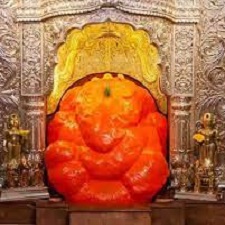
The murti of Lord Ganesha, riding a peacock, in the form of Mayureshwara is believed to have slain the demon Sindhu at this spot. The idol, with its trunk turned to the left, has a cobra (Nagaraja) poised over it protecting it. This form of Ganesha also has two other murtis of Siddhi (Capability) and Riddhi (Intelligence).
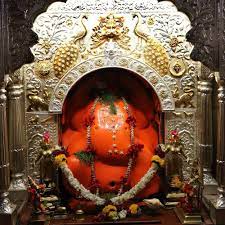
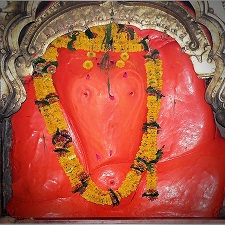
Lord Vishnu vanquished the Asuras Madhu and Kaithabha after propitiating Ganapati at this place. This is the only murti of these eight with the trunk positioned to the right.
Ganesha is believed to have saved the boy-devotee, Ballala, who was beaten by local villagers and his father for his single-minded devotion to the Lord. One speciality of this temple is that the prasad offered to this Ganapati at Pali is Besan Laadu instead of Modak that is normally offered to other Ganapatis.
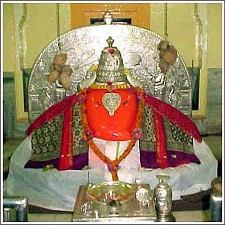
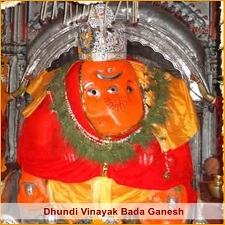
In the above-mentioned story the stone idol which Ballal used to worship, and which was thrown away by his father Kalyan Sheth is known as Dhundi Vinayak. The idol faces west. From ancient time, it is a practice to take darshan of Dhundi Vinayak before having darshanof the main idol Shree Ballaleshwar.
Ganesha is said to reside here in the form of Varada Vinayaka, the giver of bounty and success. This is the only temple where devotees are allowed to personally pay their homage and respects to the idol. They are allowed in the immediate vicinity of this idol to perform their prayers.
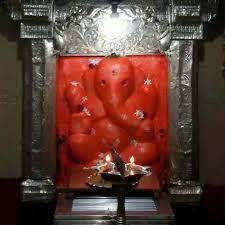
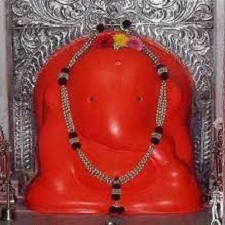
Ganesha is believed to have got back the precious Chinatamani jewel from the greedy Guna for sage Kapila at this spot. However, after bringing back the jewel, sage Kapila put it in Vinayaka's neck. Thus the name Chintamani Vinayak.
It is believed that Parvati (Shiva's wife) performed penance to beget Ganesha at this place. Girija's (Parvati's) Atmaj (son) is Girijatmaj. This temple stands amidst a cave complex of 18 caves of Buddhist origin. This temple is the eighth cave. These are called Ganesh-leni as well. The temple is carved out of a single stone hill, which has 307 steps.
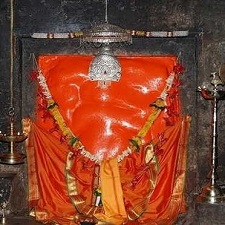
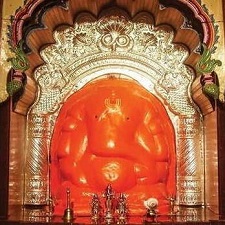
Here Ganapati is reputed to have defeated the Asura Vignasur who went about destroying Vedic yagnas and sacrifices. Upon the Asura's request Ganapati assumed the name of Vignahar or Vigneswar in honour of the Asura.
Shiva is believed to have worshipped Ganesha before fighting the demon Tripurasura here. The temple was built by Shiva where he worshipped Ganesha, and the town he set up was called Manipur which is now known as Ranjangaon.